
MSK develops CAR-T approach inspired by AML patients in long-term remission
Researchers at Memorial Sloan Kettering Cancer Center have developed a preclinical CAR-T cell therapy for acute myeloid leukemia (AML) inspired by antibodies found in patients who achieved long-term remission after bone marrow transplant. The therapy targets U5 snRNP200, a protein normally located inside the cell nucleus but found on the surface of leukemia cells in about half of AML patients, potentially allowing leukemia cells to be attacked while sparing healthy blood-forming cells.
The team engineered CAR-T cells from the remission-associated antibody sequences and “armored” them to secrete IL-18, boosting immune activity and increasing target expression on cancer cells. In mouse models of adult and pediatric AML, the CAR-T cells eliminated leukemia, preserved healthy blood cells, and provided long-term protection after re-challenge; the approach also showed promise against B-cell acute lymphoblastic leukemia, including CD19-negative cells. MSK is now pursuing an IND designation to move the therapy toward clinical testing. Source
Precision base editing corrects Dravet syndrome mutation in mice
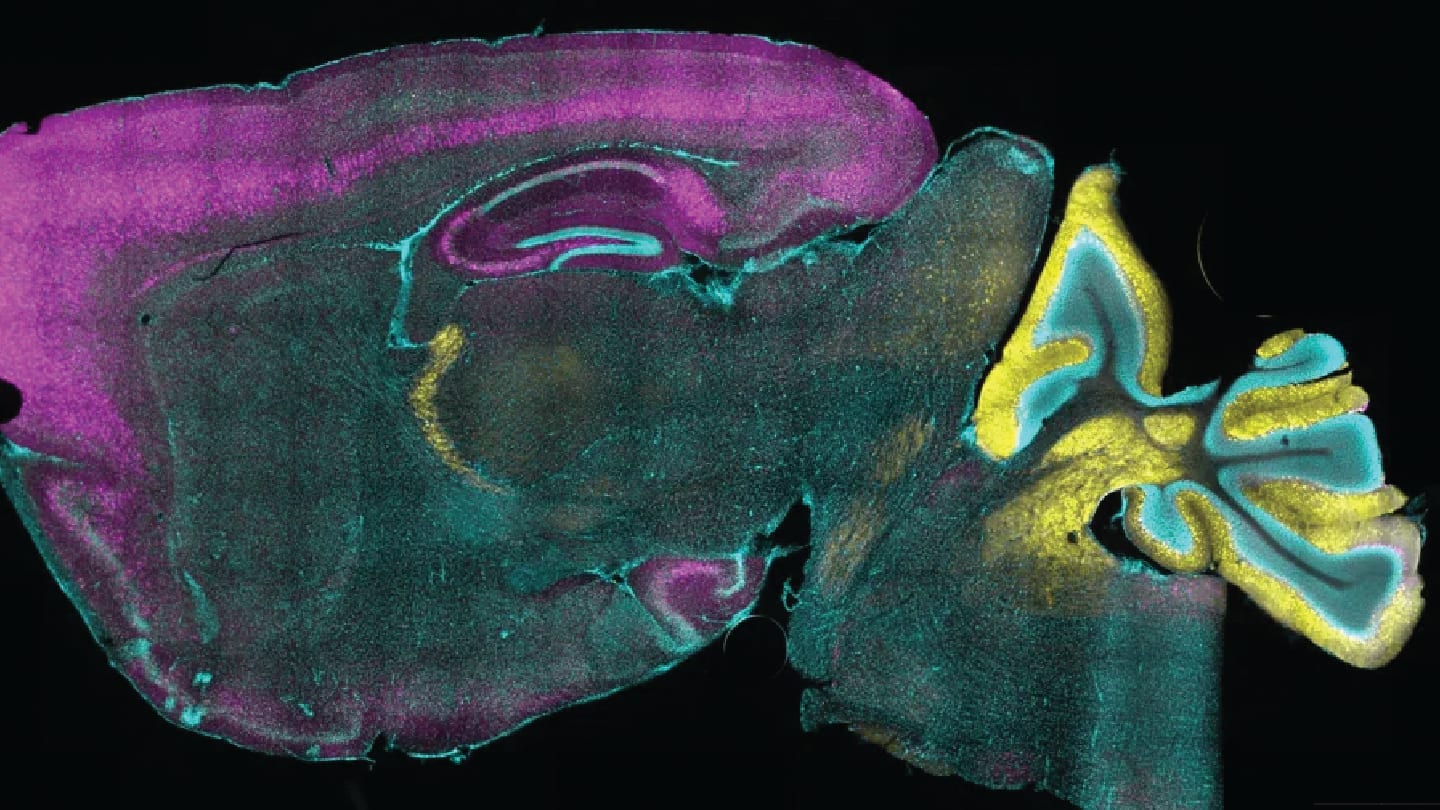
A precision gene-editing strategy has reduced seizures and improved survival in a mouse model of Dravet syndrome, a rare and severe form of childhood epilepsy. The preclinical study focused on the R613X variant in SCN1A, which prevents production of a fully functional Nav1.1 channel and contributes to neuronal overexcitability.
The team from the Jackson Laboratory, the Broad Institute, and the Children’s Hospital of Philadelphia delivered an adenine base editor by a single brain injection in very young mice, either at birth or on day 12 after birth. Treated mice showed correction of nearly 60 percent of the mutated DNA, with restoration of gene function, far fewer seizures, and longer survival. Importantly, mice treated after birth also benefited, suggesting that intervention may still be possible after symptoms begin. Source
Prime editing treats inherited epilepsy in mouse model
A prime-editing strategy from the University of Zurich has corrected a disease-causing SCN1A mutation directly in the brain, reducing fever-induced seizures and improving survival in a mouse model of inherited epilepsy. The preclinical study focused on GEFS+, a genetic epilepsy syndrome linked to mutations in SCN1A, which encodes a sodium channel involved in neuronal signaling.
Rather than adding a replacement gene, the approach used prime editing to repair the faulty DNA sequence while preserving the gene’s natural regulation. In treated mice carrying the same SCN1A mutation found in patients with GEFS+, the therapy corrected the mutation in most nerve cells in a key brain region and improved altered signaling between neurons. Around 80 percent of control animals developed fever-induced seizures, compared with about 15 percent after prime editing. Source
Prime assembly enables large DNA insertions into the genome
A new gene-editing technology from UMass Chan Medical School can precisely insert large, gene-sized DNA segments into the human genome, potentially expanding the range of genetic diseases that could be treated by genome rewriting. The approach, called prime assembly, combines features of prime editing and Gibson assembly to insert DNA sequences up to 11,000 base pairs long.
Unlike conventional CRISPR, base editing, or prime editing approaches, which are typically limited to short DNA changes, prime assembly is designed to replace much larger stretches of genetic code. This could be especially useful for diseases caused by many different mutations across the same gene, where developing separate edits for each patient-specific variant would be inefficient. Source
MHRA consults on updated UK gene therapy definition
The MHRA has launched a UK-wide consultation on proposed changes to the legal definition of gene therapy medicinal products, aiming to bring regulation in line with advances in gene therapy, synthetic biology, and gene editing. The agency says the updated definition would classify products based on how they work, while leaving existing approval processes, licensed product classifications, and safety, quality, and efficacy standards unchanged.
The proposals include removing the requirement for gene therapies to be biological in origin, clarifying when synthetic or recombinant nucleic acids fall within scope, and ensuring sequence-specific genome editing products are regulated as gene therapy medicinal products regardless of substance type. The MHRA also plans to maintain the exclusion of infectious disease vaccines from GTMP definitions. The consultation is intended to provide greater certainty for developers, manufacturers, researchers, clinicians, and regulatory professionals working in the field. It opened on May 11, 2026, and will run until June 22, 2026. Source
Cellular Intelligence secures Novo Nordisk Parkinson’s cell therapy program
Zuckerberg-backed Cellular Intelligence has acquired global rights to Novo Nordisk’s clinical-stage Parkinson’s disease cell therapy program, STEM-PD. The agreement gives the AI-native TechBio company responsibility for advancing the allogeneic stem cell-derived therapy, which is currently in an early-to-mid-stage trial and has FDA Fast Track Designation.
The therapy is designed to replace the dopamine-producing nerve cells lost in Parkinson’s disease, with the aim of delivering a disease-modifying treatment for patients with the progressive neurodegenerative disorder. Novo Nordisk had shut down its cell therapy unit last October as part of a broader restructuring, discontinuing development of the program. Under the new agreement, Novo will take an equity stake in Cellular Intelligence and may receive future milestone payments and royalties; financial terms were not disclosed. Source
OrganaBio acquires Excellos assets to build bicoastal cell therapy CTDMO
OrganaBio has acquired San Diego-based Excellos, creating a coast-to-coast cell therapy contract testing, development, and manufacturing organization. The San Diego operations will continue under a new OrganaBio subsidiary, Excellos Labs, with the core Excellos team retained and existing customer programs expected to continue without interruption.
The combined organization brings together OrganaBio’s Miami-based cell sourcing, GMP cell manufacturing, PBMC isolation, cryopreservation, process development, and analytical testing capabilities with Excellos’ San Diego facility, which includes five ISO 7 cGMP cleanroom suites for autologous and allogeneic cell therapy manufacturing, cell isolation and enrichment, expansion, and fill/finish. Source
Cellares and ProTgen partner to automate progenitor T cell therapy manufacturing
Cellares and ProTgen have announced a manufacturing and regulatory-support partnership for ProT-096, ProTgen’s personalized progenitor T cell therapy for refractory leukemia and other hematologic malignancies. The collaboration will apply Cellares’ automated Cell Shuttle and Cell Q platforms to support manufacturing and quality control, while also helping ProTgen prepare an IND submission.
ProT-096 is designed to restore immune competence in patients whose immune systems have been severely weakened by intensive cancer treatment. The therapy uses ProTgen’s targeted Notch activator platform to generate progenitor T cells with the aim of reconstituting long-term adaptive immune protection. Source
Terumo BCT and Steminent collaborate on scalable MSC manufacturing
Terumo Blood and Cell Technologies and Steminent Biotherapeutics have entered a strategic collaboration to support late-stage manufacturing readiness for mesenchymal stem cell therapies. The work will focus on optimizing automated MSC expansion using Terumo BCT’s Quantum Flex Automated Cell Expansion System, with the aim of improving consistency, scalability, and efficiency as Steminent advances toward late-stage trials and potential commercialization. Source
Catalent and Elpida partner on late-phase AAV manufacturing
Catalent and Elpida Therapeutics have entered a strategic partnership to support late-phase manufacturing of Elpida’s lead AAV9 gene therapy program for Spastic Paraplegia Type 50, an ultra-rare neurodegenerative disorder caused by AP4M1 mutations. The agreement is intended to help maintain patient access to the therapy and support its path toward regulatory submission. Source
Lonza launches stable producer cell line platform for scalable AAV manufacturing
Lonza has launched Xcite AAV, a stable producer cell line platform designed to help gene therapy developers improve scalability, process robustness, and cost efficiency in viral vector manufacturing. The technology offers an alternative to transient transfection-based AAV production, which can become increasingly variable, complex, and expensive as programs move toward larger patient populations or higher-dose indications. Source