
A case report in Clinical Case Reports describes a 5-month-old infant diagnosed with Stüve-Wiedemann syndrome after genetic testing identified a novel homozygous nonsense variant in the leukemia inhibitory factor receptor gene (c.823G>T, p.Glu275Ter), classified as likely pathogenic using ACMG criteria.
Stüve-Wiedemann syndrome is a rare autosomal recessive disorder characterized by bowed long bones (bent-bone dysplasia), joint contractures, and severe dysautonomia with high early-life morbidity and mortality. The condition is associated with homozygous or compound heterozygous pathogenic/likely pathogenic leukemia inhibitory factor receptor (LIFR) variants, disrupting LIFR-mediated signaling implicated in skeletal development and autonomic dysfunction (including pathways involving the CNTF receptor).
In the reported case, the infant presented with prenatal and postnatal findings suggestive of Stuve-Wiedemann syndrome, including intrauterine growth restriction, bowed long bones, feeding difficulties, recurrent respiratory distress, and episodic hyperthermia. Physical examination revealed dysmorphic features, hypotonia, fixed flexion deformities of the fingers, and shortened, bowed extremities, with growth parameters below the third percentile for age.
The authors note that molecular confirmation can help distinguish Stüve-Wiedemann syndrome from other skeletal dysplasias with overlapping features (e.g., campomelic dysplasia) and clarify its relationship to Schwartz-Jampel syndrome type 2, which is now considered part of the same clinical entity.
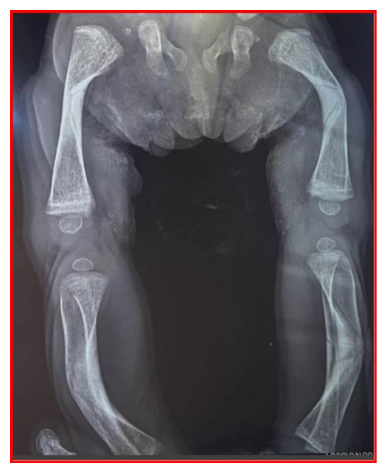
The report also reviews the broader clinical spectrum of Stuve-Wiedemann syndrome, emphasizing that dysautonomia — manifesting as hyperthermia, respiratory instability, feeding impairment, and ocular complications — is a major driver of early mortality. The global mortality rate is 46%, with 42% occurring during the first two years of life. Although initially regarded as uniformly lethal, longer-term survival has been reported in some patients, particularly beyond the first two years of life, when mortality risk declines.
Hamasharef and colleagues declared having no competing interests.
Source: Clinical Case Reports
Image reproduced with permission from Hamasharef et al., Clinical Case Reports (2026), CC BY-NC-ND.
