
A case report published in Clinical Case Reports describes a rare neonatal presentation of 48,XXYY syndrome involving both ambiguous genitalia and Tetralogy of Fallot. The report highlights the importance of early genetic testing in newborns with disorders of sex development and congenital heart defects.
48,XXYY syndrome is an uncommon sex chromosome aneuploidy, estimated to occur in approximately 1 in 18,000 to 1 in 50,000 live male births. Although it was once considered a variant of Klinefelter syndrome, it is now recognized as a distinct condition with a broader clinical profile. Most individuals are diagnosed in childhood, often during evaluation for developmental delay or endocrine concerns. Neonatal diagnosis is uncommon.
The reported case involved a preterm infant born at 32 weeks’ gestation who was referred for evaluation on day 5 of life because of ambiguous genitalia. Physical examination showed bilateral inguinal testes, a micropenis, perineal hypospadias, and a bifid scrotum. The infant was admitted to the neonatal intensive care unit on day 4 of life because of cyanosis and apnea.
Cardiac evaluation revealed Tetralogy of Fallot (TOF) with adequate pulmonary blood flow. While congenital heart defects are reported in more than half of patients with 48,XXYY syndrome, they are most often septal or valvular defects. TOF has not previously been reported in a neonate with this chromosomal condition.
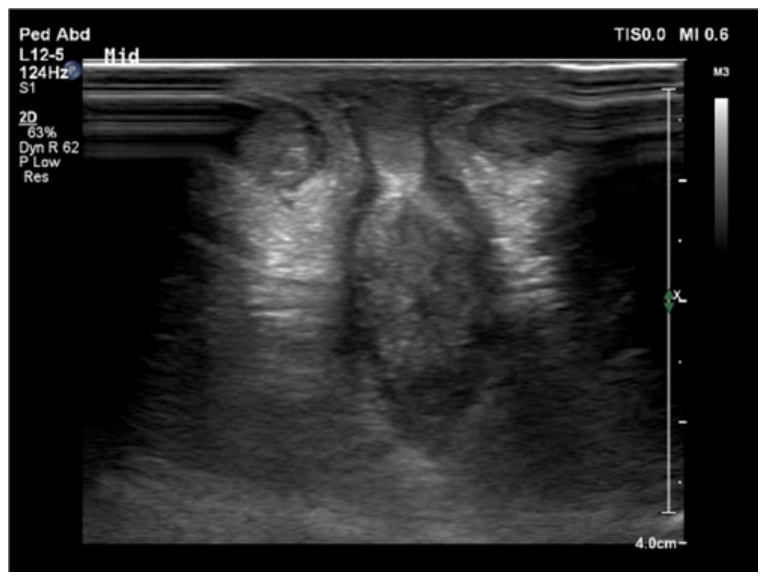
Laboratory testing showed gonadotropin and adrenal hormone levels within normal ranges for age, with normal electrolytes. Pelvic ultrasonography confirmed the presence of bilateral testes in the inguinal canals and showed no Müllerian structures or renal abnormalities. Given the combination of genital and cardiac findings, chromosomal analysis was performed.
Conventional karyotyping of peripheral blood lymphocytes identified a non-mosaic 48,XXYY karyotype. All analyzed metaphases showed the same chromosomal pattern, excluding mosaicism at the level tested. The infant was managed by a multidisciplinary team including pediatric endocrinology, cardiology, urology, and medical genetics.
Ambiguous genitalia is a very rare neonatal presentation of 48,XXYY syndrome, with only one prior case reported. The combination with TOF further expands the known neonatal phenotype of the condition.
This case helps broaden the known clinical spectrum of the syndrome and highlights the importance of early genetic and cardiac evaluation in newborns with ambiguous genitalia.
The authors declared having no competing interests.
Reproduced from Gazzaz N. A Rare Neonatal Case of 48,XXYY Syndrome Presenting With Ambiguous Genitalia and Tetralogy of Fallot. Clinical Case Reports. 2026;14:e71839. doi:10.1002/ccr3.71839. CC BY-NC-ND 4.0.